

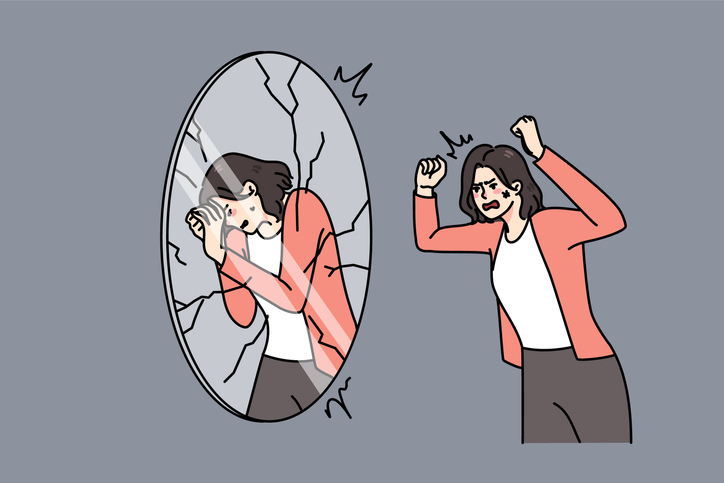
First coined by psychologist Jennifer Freyd in the 1990s, DARVO stands for Deny, Attack, Reverse Victim and Offender. It describes how culprits of interpersonal violence often deflect blame and responsibility for any wrongdoings when confronted about their behaviour. By using DARVO, the perpetrator:
- May deny that they have done anything wrong. They may minimize the feelings of the person they have abused by claiming that the victim is overly sensitive or is blowing things out of proportion or being ridiculous.
- May attack the credibility and character of the survivor. They may bring up incidents from the past to discredit accusations and label them as a liar. They may also use gaslighting to confuse the survivor of their abuse.
- Reverses victim and offender roles such that the perpetrator assumes a victimized position and declares the victim to be the true wrongdoer. Their aim is to discredit the survivor while making it seem as though they are the one who has been abused.
In this manner, the perpetrator uses manipulation and actively tries to explain away or change the bystander’s understanding of events. They use DARVO as a manipulation tactic to evade the distress and disorientation that they’ve caused the victim and make them doubt their own memory or sense of what happened.
For example:
- “You think I was rude to you? Wow, you really misread that situation as usual. Honestly, I think you need to get some help. It’s like you can’t just accept me for who I am.”
- “What are you talking about? It wasn’t that bad! You’re always so dramatic. Why do you make everything so stressful in our relationship?”
- “I can’t believe you’re saying I hurt you! It’s never enough for you, is it? I think you’re really toxic and I don’t feel safe around you anymore. Now my heart is broken because all I ever did was love you and be a good person to you, and this is what I get in return.”
In each of these examples, the person causing harm tries to deny, minimise, or brush off what they have done instead of taking responsibility for it. They may then turn the focus towards you — questioning your memory, your intentions, your credibility, or even why you are speaking up in the first place. The idea is to make you doubt yourself, while taking the attention away from their behaviour. And then comes the twist in the story. They may present themselves as the one who has been hurt, making you feel like you need to explain yourself, defend them, or even support them. Over time, this can go beyond just making you question your own experience. They may also try to influence how others see the situation, so that you are slowly painted as the “bad guy” while they receive sympathy and support from the people around you.
How to Spot DARVO
DARVO can be subtle or it can be overt. Here are some of the most common signs to watch out for.
- Immediately Denying: the person who is blamed immediately turns the tables and denies the event or behaviour without acknowledging any possibility of the truth. For example, Sarah tells her partner that he shouted at her during an argument. He immediately responds, “I never shouted at you. You’re making that up.”
- Emotional Manipulation: The accused may use guilt, fear, or sympathy to confuse or silence the accuser. For example, Daniel raises a concern about being repeatedly criticised, but the other person responds, “After everything I’ve done for you, this is how you treat me?”
- Claims of Being the Victim: the accused may portray themselves to be the one who is actually suffering or being bullied, attacked or hurt. For example, Emma tells her friend that a hurtful comment affected her, only to hear, “I’m the one who is always being attacked here.”
- Avoiding Accountability: The accused refuses to take responsibility or apologize, often changing the subject or deflecting. For example, when James is asked to apologise for breaking a promise, he changes the subject to something his partner did months ago instead of addressing what happened.
- Turning the Accuser into the Problem: Instead of addressing the concern, the accused attacks the accuser’s character or intentions, making them out to be sensitive or wanting to ruin their reputation/life or having issues. For example, when Olivia raises a concern about being spoken to disrespectfully, her partner responds, “You’re too sensitive. No one else has a problem with me.”
Effects of DARVO Manipulation on the Victims
DARVO does not just cause harm in the moment, rather it linger on, leaving deep emotional and psychological effects.Anxiety
Victims who have undergone DARVO manipulation are often left feeling extremely anxious, constantly scanning for danger around them and second-guessing every word and action (either their or someone elses’). They try to walk on eggshells around their own lives and try not to set someone off. They are in a constant state of alertness and live their lives in fear – something that isn’t beneficial (either physically or psychologically) in the long-term. For example, a person may begin carefully choosing their words because they are constantly worried that raising a concern will lead to another argument or accusation.
Depression
This is another significant consequence that can leave victims feeling emotionally drained, hopeless, and powerless after ongoing manipulation. Sometimes, they might even develop major depressive disorder characterized by persistent sadness, feeling worthless, and losing interest in activities which they used to enjoy beforehand. For example, after repeatedly being blamed for problems they did not cause, someone may begin feeling helpless and lose interest in activities they once enjoyed.
Self-Blame
Research suggests that there is a direct relationship between DARVO and increased self-blame among those who are exposed to such manipulation. the more DARVO tactics a perpetrator uses during confrontation, the more victims report feeling responsible for the wrongdoing committed against them. This type of self-blaming is particularly damaging when it is associated with increased psychological distress, maladaptive coping mechanisms and symptoms of post-traumatic stress disorder. For example, after repeatedly being told that they “caused” every argument, a person may start thinking, “Maybe everything really is my fault.”
Perception of Reality
DARVO plays with the victims’ perception of reality, leading them to internalize false narratives that they are the perpetrators, causing confusion, dissociation, derealization, and a complete loss of their sense of self and boundaries. For example, someone may clearly remember being insulted but later question their memory after repeatedly being told, “That never happened. You’re imagining things.”
Isolation
This type of manipulation often isolates the victims from their support system because the manipulator may twist the story about the incident in their favor, making it seem as if they are the victims. For example, a manipulator may tell mutual friends that they are the one being mistreated, causing the survivor to feel misunderstood and withdraw from the group.
Perpetuation
This cycle of manipulation can prevent the victim from seeking help, prolonging the abusive situation and enabling further harm. For example, someone who repeatedly doubts their own version of events may stop telling others what is happening and remain in the harmful situation for longer.
Protecting Yourself from DARVO
Learning about the signs of DARVO is a good first step in recognizing when it is being used with you. People who have been educated about this manipulation tactic are less likely to believe their perpetrators when they try to victimize themselves and shift blame. Additionally, bystanders are more likely to believe the survivors of abuse than the abusers. Other methods that a person can use to protect themselves against DARVO include:
- Recording or making note of DARVO occurrences as well as other abuse, including the date and time.
- Speaking to a mental health professional or seeking support from a trusted friend or family member.
- Setting boundaries about what is acceptable and what is not.
- Speaking to a support worker or joining a support group for survivors of abuse.
- Trying to remain calm and composed and keeping your emotions in check can help you respond effectively to the manipulation tactic.
- Refuse to respond to personal attacks or attempts to reverse roles. Stay focused on the issue – bring it back to the original point, don’t let them sidetrack you.
- Take time to care for your emotional and physical health. Engage in activities that restore your sense of balance and peace.
- If the behavior continues and causes emotional harm, it may be time to end the relationship. Protecting yourself should always come first.
- Repeat your concerns calmly and clearly without getting sidetracked.
DARVO can be particularly damaging because it does more than deny harmful behaviour — it can make you question your own experience while shifting attention away from the person responsible. Recognising this pattern can help you understand that feeling confused, guilty, or compelled to defend yourself does not necessarily mean you are at fault. Manipulation thrives when accountability is replaced by blame, but healthy relationships allow room for concerns to be heard, responsibility to be taken, and harm to be acknowledged. Understanding DARVO is therefore not about labelling every disagreement as manipulation; it is about recognising repeated patterns that undermine your reality, boundaries, and sense of self. Sometimes, protecting yourself begins with trusting what you experienced and refusing to carry responsibility for someone else’s actions.
Photo Credits: Iryna Pasichnyk
Citations
Haghighi, A. S. (2025, May 22). What to know about DARVO.
https://www.medicalnewstoday.com/articles/what-is-darvo
Harsey, S., & Freyd, J. J. (2020). Deny, attack, and reverse victim and offender (DARVO): What is the influence on perceived perpetrator and victim credibility?. Journal of Aggression, Maltreatment & Trauma, 29(8), 897-916.
Harsey, S. J., Zurbriggen, E. L., & Freyd, J. J. (2017). Perpetrator Responses to Victim Confrontation: DARVO and Victim Self-Blame. Journal of Aggression, Maltreatment & Trauma, 26(6), 644–663.
Loyola, C. (2026). Understanding DARVO: Definition Signs and how to Identify it. Onyx.
https://www.onyxcounselingandwellness.com/post/understanding-darvo-definition-signs-and-how-to-identify-it
Snell-Nelson, C. (2024). Understanding DARVO: a manipulative tactic and how to protect yourself. Break the Silence Against Domestic Violence.
https://breakthesilencedv.org/?p=19530

Ruchi Om
About the author
Ruchi Om is the founder of ‘the mind talk’ and a counsellor registered with ACA. She believes that the road to personal growth and development might prove challenging at times but it is worth it. She believes that we all have agency and we must move forward in life with intention and purpose. In addition, she continues to specialise in learning and training in classrooms and trains parents in the art of parenting and conflict management.

Sakshi
About the author
Sakshi is a clinical psychologist with a deep passion for understanding human behavior, a strong drive for research, and a keen eye for psychological intricacies. Committed to continuous learning, she seeks to explore every facet of psychology, from theory to practice, to better support and empower individuals. With a curiosity that fuels her pursuit of knowledge, she strives to bridge the gap between research and real-world applications, making psychology more accessible and impactful.
Recently Added

Spirituality empowers human existence with meaning. It helps establish goals and value systems that drive almost all aspects of a person’s life. …

In a world shaped by trends and social influence, following the crowd has become almost second nature. We want a better balance …

Seeking therapeutic support isn’t the easiest task for any of us. And when families seem to be involved in the mix, it …