

The Mind Talk

Background image
An Expat Identity Crisis

Living lavishly, far away from “home” – the expat lifestyle can by many, be likened to an extraordinary adventure, enabled by a salary much higher than that of the local average and limited only by the amount of time one is expected to be at the office.

It can be tempting to think that expats and their children should have nothing to complain about and if you ask them, more often than not, they will agree with you. But under the surface, wrapped in a blanket of shame, lies a neat little bundle of mental health issues uniquely formed by the very lifestyle that has given them so much. 

Initially, the simultaneous experience of a duality of cultures (one’s home culture and host culture) can be quite the novelty. But as time passes, the novelty begins to wear off and a sense of confusion surrounding one’s identity sets in. Be it through the expat’s lack of knowledge about the host culture or its language, or the difference in living standard to the local population or better yet – the difference in ethnicity – the expat is constantly reminded that they do not belong to the host culture. In fact, it is quietly implied that the expat experience is not permanent. They are, someday, expected to return to their home country or to be sent somewhere else by a corporate sponsor. Yet, the longer the expat lives in their host culture, the more likely it is they will lose confidence in their connection to their home culture. This is where the expat’s identity issues begin. 

The Expats Achilles Heel – Wanting To Be Unique Whilst Yearning For Connection

In my experience as a therapist specializing in expats and their children, expats are more likely to be extroverted about their connection to their home culture when living in their host culture and, when on holiday back home, they are more likely to be touting their connection and sense of loyalty towards their host culture. 

For example, an Englishman living in Hong Kong, would outwardly be displaying their sense of pride in being English when they’re in Hong Kong, but the moment they set foot in the UK for a holiday, they would be quick to remind family members and members of the local community that they live in Hong Kong and are, in fact, not part of the local community. 

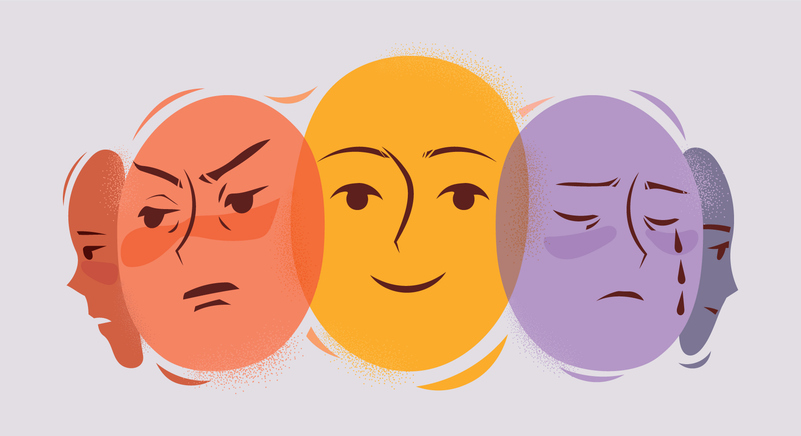
This points, not only to a sense of anxiety concerning one’s loyalty and connection towards both cultures (and for those of you who are interested in psychological concepts, I would suggest that you read more about the Paranoid-Schizoid & Depressive Positions in Object Relations Theory) but also indicates that the expat has created their own identity to cope with their lack of connection to their home and host cultures, namely that of the expat or the foreigner

But in doing so they also create a distance between themselves and the two cultures and enter a situation where they must keep the distance to maintain their new identity. Once someone starts identifying as an expat, the difficulty lies in maintaining that identity. The expat identity can be used as a substitute for a weak sense of national identity but unlike a national identity, the expat identity disappears the moment one is repatriated or integrated into the host culture to such a degree that one is deemed to be “local”.

As such, many expats find themselves in a situation where they look for a new host culture every few years and in doing so, they unknowingly uphold the status-quo of having a weak (some may say superficial) connection to their home and host cultures. This in turn, strengthens the identity as the expat, and the sense of uniqueness that comes with it, leading to a self-sabotaging cycle of moving somewhere new every few years. 

Understanding The Impact of a Global Lifestyle on the Mental Wellbeing of Expats and Their Children

What About The Kids?

This phenomenon is not unique to expats, their children (known as Third Culture Kids) tend to move between different countries as adults out of a fear of settling down. I meet many of them at my practice and often they describe it as an addiction – a constant craving for renewal and a sense of being unique in relation to one’s environment. The irony is that they, as all humans do, have a natural urge to meet someone special and build a family, a feat that is hard enough as it is, without taking into account that one isn’t living long enough in one place to build proper relationships. The “Itchy Feet Syndrome”, as it has been coined by the Third Culture Kid community, is a global, modern-day example of what Freud would have called Thanatos or The Death Drive – a subconscious willingness to inflict harm on oneself out of a fear of moving on. But why is nationality so important to begin with? 

National Identity In A Global World

Well, it doesn’t have to be for people who are living in the country that they were born in, but for those who are living in a host country, nationality is used as a reference point and a tool to build relationships. We all have something that identifies us. If someone asks us to share something about ourselves, we may say, “I’m a doctor” or “I’m a father”. But as an expat, someone might see us and automatically assume that we are not from the country that we are living in and therefore ask us “Where are you from?”. This is, more often than not, followed by a short conversation where both parties share their knowledge about the other person’s home culture in hopes of forming a connection. Nationality as a concept is, in an international setting, ironically enough, inescapable. 

Needless to say, the identity issue laid out in this article is just one example of an inner conflict experienced by expats. Another example, which comes to mind as I am writing this, is the difficulty spouses of expat workers have in finding an outlet to achieve self-fulfilment. But that’s a topic for a different article. Either way, whatever form they take, inner conflicts are the root cause of mental health issues such as depression and anxiety. It is only once the inner conflict is fully resolved that we can truly be free from these issues. For some it may take lengthy therapy treatment or years of introspection, whereas others might try to find relief by working on acceptance. If you can relate to what is written in this article, or know someone who can, I want you to know that there is hope.

Photo Credits:
First image: freepik
Second image: freepik

References

Kuss, D. J., & Griffiths, M. D. (2012). Online gaming addiction in children and adolescents: A review of empirical research. Journal of behavioral addictions, 1(1), 3-22.

Young, K. (2009). Understanding online gaming addiction and treatment issues for adolescents. The American journal of family therapy, 37(5), 355-372.

Philip Andersson

About the author

Philip is a therapist and the founder of Wherapy.com – an online therapy service specializing in the treatment of mental-health issues related to a global lifestyle. Having spent several years living abroad both during childhood and adulthood, Philip’s knowledge of psychotherapy is complemented by a unique insight into the experience of global nomads. His passion lies in applying age-old psychodynamic concepts to the comparably new phenomenon of expats and TCKs.

Recently Added

Ally Lobanova

Ally Lobanova is the visionary founder of Signature Events, renowned for crafting exceptional and personalized experiences. With a rich background in global …

Shikha Lamba

Shikha S. Lamba is a jewelry designer and poet living in Hong Kong.  She is the co-editor of an online magazine, Coffee …

Afroditi

Afroditi is a Greek-born mother in Hong Kong, and a passionate voice for normalizing infertility discussions. After leaving her banking career, she …