

The Mind Talk

Background image
Building a Positive Mindset

The human mind runs wild, it’s a mystery filled with contradictions. It carries both the power to liberate and the potential to confine. It visualizes, creates, manifests and controls the very emotions and thoughts that sculpt our perception of life. Present at the beginning, middle, and end of every experience, the mind is the silent architect behind everything we are. It is powerful enough to build empires, yet fragile enough to break them. Every day, an average person gets 60,000 to 70,000 thoughts, most of them repeating like background noise, shaping how we see ourselves and the world.

Olympian Michael Phelps once shared how visualization, rehearsing mentally every move before actually doing it helped him. Neuroimaging studies show that when you imagine doing something, the same brain regions activate as when you actually do it. We often hear that “you become what you think,” brushing it off as a cliché. But it’s not some philosophical quote lingering around for so long It’s neuroscience. Your mind gives you the power to be your wings or cage, at the same time.

Despite this potential, the mind remains dormant, barely reaching its prime. Before an important event, instead of cultivating this superpower we force it into a cage. locked away. This mental paralysis, known as rumination, keeps us trapped in endless cycles of “what-ifs” and past regrets. When the self is stuck constantly thinking of possibilities, consequences, and not letting go of what-ifs, we have already lost the battle.

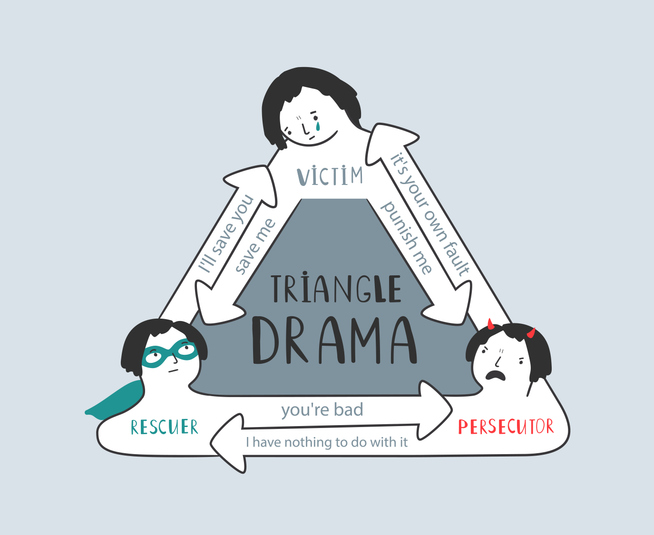
Eric Berne’s theory of Transactional Analysis offers insight into this inner struggle. He proposed that the “Critical Parent Ego State” forms the core of our Inner Critic; a voice shaped by our early interactions, often echoing parental judgments. Over time, these internalized phrases shape how we perceive ourselves, making self-worth something we constantly feel we must earn. Thus, the greatest battles of our lives are often fought within our own minds.

Building a Positive Mindset

Building a positive mindset is a long process. It is not an easy path, it is messy, unruly, and non-linear, but it is effective. The first step is the process of getting to know our thoughts can be achieved by what we call metacognition. We then need to learn to separate the literal meaning of our thoughts from the emotions attached to it by engaging in Cognitive Diffusion. Finally, the key that unlocks this transformation is self-compassion, giving self the space to build the positivity it requires to thrive. Assistance of Cognitive diffusion, self compassion and defeating Cognitive toxicity results in building a positive mindset.

The current digitalized world relies on social media platforms all pervading in society. The contents, movies, reels, blogs, influencers, stories basic purpose was to lead awareness, unlikely the only purpose accepted by the mind, human cognition uses reference, environmental and observational learning enhances one’s growth. It has become a platform of learning, self expression, self acceptance, spreading awareness and social support. 

Like the baby bird that learns to fly only after being nurtured, the human mind, too, thrives when nature and nurture unite. History has witnessed all the mighty great warriors were nurtured in a method to develop vision, passion and compassion for society, mere self development is not enough Building a positive healthy mindset needs to have both nature and nurture in hand to achieve success.

The creator of our reality is our mind. How we see and live our lives is shaped by the thoughts we have, the habits we develop, and the beliefs that motivate us. We don’t just think about things. Even when we are unaware of it, the mind uses them as blueprints to create our reality. Despite everything we know, there is still a great deal to learn about the mind’s immense power. One thing is certain, though: we have a choice in how we exercise that authority.

Photo Credits:
First image: Margolana
Second image: Peach_iStock

References

Seppälä, E., & McNichols, N. (2022). The Power of Healthy Relationships at Work. Harvard Business Review. https://hbr.org/2022/06/the-power-of-healthy-relationships-at-work

Bhavya Jain

Bhavya Jain

About the author

Bhavya Jain is an I/O Psychologist and Integrative Psychotherapist committed to promoting positive mental health and breaking the stigma around therapy. In addition to running a successful startup that has grown into a recognized mental health space, supporting over 2000 clients and conducting more than 200 workshops across India, she also led a year-long pro bono initiative. She partnered with schools and non-profits to make mental health support accessible to underserved communities, driven by her core belief that therapy should be available to all, a principle she lives by.

Recently Added

Ally Lobanova

Ally Lobanova is the visionary founder of Signature Events, renowned for crafting exceptional and personalized experiences. With a rich background in global …

Shikha Lamba

Shikha S. Lamba is a jewelry designer and poet living in Hong Kong.  She is the co-editor of an online magazine, Coffee …

Afroditi

Afroditi is a Greek-born mother in Hong Kong, and a passionate voice for normalizing infertility discussions. After leaving her banking career, she …