

What is EMDR Therapy?
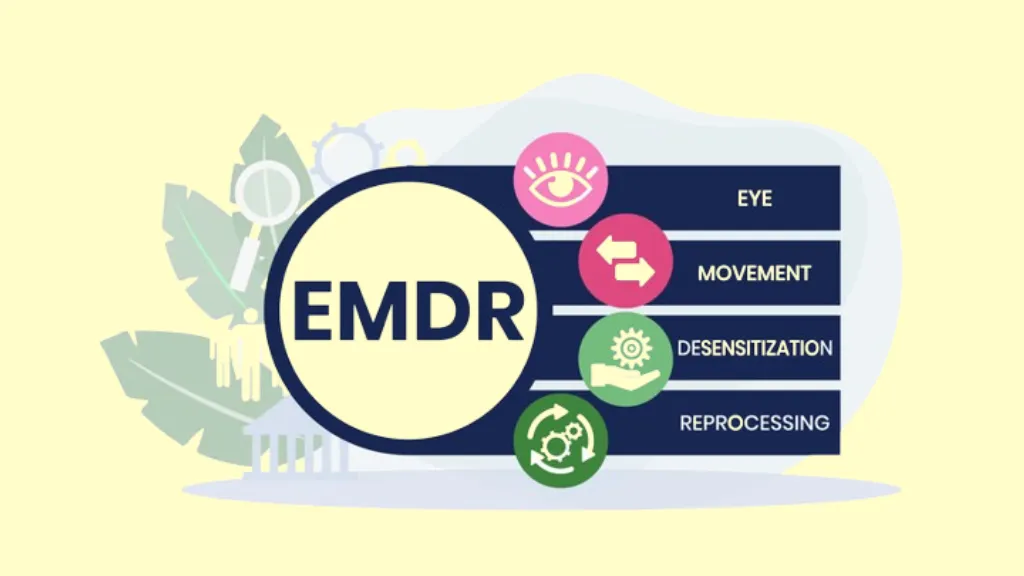
Eye Movement Desensitization and Reprocessing (EMDR) Therapy consists of a structured set of protocols and procedures based on the Adaptive Information Processing (AIP) model that aims to treat traumatic memories and their associated stress symptoms. It was introduced by Francine Shapiro in 1987. It was the year of Shapiro’s famous walk in the park that led to the clinical observation that spontaneous bilateral eye movements created conditions that were associated with a reduction in distress when she focused on disturbing material. Known as EMD back then, it was a simple desensitization process developed as a treatment for PTSD. Over the course of time, it came to be known as EMDR therapy which is now extendable to multiple other psychological conditions along with PTSD.
EMDR Therapy: Not Your Talk Therapy
EMDR uses bilateral stimulation and a structured approach to directly target traumatic memories and reprocess them. Bilateral stimulation means moving your body in a rhythmic way that activates both sides of the brain–such as rapidly moving your eyes from left to right or alternating tapping your left and right knee–while focusing on a specific memory. However, traditional talk therapy is more flexible and often goes with the flow of the session. It utilizes conversational techniques to help address various mental health conditions. Secondly, EMDR yields quicker results than talk therapy that requires long-term engagement, ongoing support and deeper exploration.
EMDR Therapy: How does it work with Trauma?
EMDR therapy helps accelerate the natural emotional healing through desensitisation and reprocessing phases. The “processing” part of EMDR means setting up a learning state that will allow experiences that are causing problems to be ‘digested’ and stored appropriately in your brain. That means that what is useful to you from an experience will be learned, and stored with appropriate emotions in your brain, and be able to guide you in positive ways in the future. The eye movement aspect speeds up the process of therapy.
In the Rapid Eye Movement portion, the client focuses on a troubling memory and identifies the negative belief he has about himself connected to this memory (for example, in dealing with a rape, the person may believe “I am dirty”). The individual then formulates a positive belief that he would like to have about himself (“I am a worthwhile and good person.”). The individual then goes over the memory while focusing on an external stimulus that creates bilateral (side to side) eye movement. This is most often achieved by watching the therapist moving a finger. After each set of bilateral movements, the individual is asked how he feels. This process continues until the memory is no longer disturbing.
What to Expect When You Choose EMDR Therapy?
EMDR therapy involves eight phases or procedural steps from the first session to the last one. These are:
Phase 1: History Taking
Like any other therapy, the first phase involves gathering all the necessary information to aid in case conceptualization and develop a treatment plan, determining which memories will be targeted for reprocessing in what order. This stage also involves the building of a non-judgemental and supportive therapeutic alliance.
Phase 2: Preparation/Stabilization
This phase is about determining the client’s readiness for reprocessing. The therapist explains the EMDR model to the client and addresses any concerns related to the treatment. It also includes establishing the mechanics of how the treatment will be administered, to include the bilateral stimulation, seating positions, as well as a stop signal in case the client needs to stop during the processing itself. This is also the phase where resourcing interventions are offered as needed, even if the use of resourcing interventions is not limited to this phase and may be used over the whole course of treatment.
Phase 3: Assessment
This stage involves accessing the Target Memory as it’s currently being experienced by the client and taking baseline measurements of the sensory components of their experience at the outset.
Phases 4-6: Reprocessing
During these phases, the Target Memory and associated linkages to other memories are reprocessed. Fast bilateral stimulation is used to activate the client’s inherent information processing system for 20–30s at a time with a brief check in to ensure that the process is moving. Byproducts of reprocessing such as insights, shifts in the client’s emotional response, a new, more adaptive understanding of what happened in the past, as well as assignment of meaning to the experience are indicators of the process moving towards resolution.
Phase 7: Closure
This phase is designed to close down any session, especially a reprocessing session, whether it leads to a complete or incomplete reprocessing of a Target Memory.
Phase 8: Follow Up
It takes place in the subsequent session where the therapist is asking for feedback on their experiences globally as well as evaluating the Target Memory itself.
EMDR Therapy: How to Select the Right Therapist
Finding the right EMDR specialist is a crucial step when moving towards healing. While it can feel overwhelming, choosing the right therapist will help your healing exponentially.
- Discovery: Once you’ve decided to take up EMDR therapy, the first step is to look for a certified consultant. Start by researching EMDR practitioners in your area. Look for clinicians who have completed specialized training in your specific areas of concern and are experienced in conducting EMDR sessions. You can find the therapists via Google search, EMDRIA’s website, therapy directories or references from friends and family.
- Weigh your options: When selecting a therapist, consider finding a professional who can meet your specific therapy needs and objectives. It’s crucial to find a therapist who understands your specific needs, whether related to trauma, anxiety, panic attacks, attachment issues, personality disorders, mood disorders, or other mental health concerns. You might also want to explore therapists who integrate other therapeutic modalities like mindfulness, hypnotherapy, NLP techniques, parts work, or somatic techniques into their EMDR sessions for a comprehensive approach.
- Consultation Call: set up a consultation call with the clinician you’ve chosen to go ahead with. Inquire about their years of experience, certifications, advanced training, types of concerns they work with, use of other modalities, experience in working with your particular condition, timeline for treatment, offline or online therapy, or any other general questions about the therapy itself.
- Decision-Making: Once you’ve done your research, compared a few qualified therapists and have had a chance to speak to them to ask any important questions, it’s time to make a decision. Trust your instincts and choose a therapist with whom you feel comfortable and supported.
EMDR Therapy and Depression
Depression may be triggered and sustained by traumatic life events and stressful life experiences. Chronic and acute stressors can trigger depressive episodes. In fact stressful life events are significantly correlated with the onset of major depressive disorder. With a higher severity of symptoms, the traditional pharmacotherapy yields little results. That is when EMDR therapy comes into the picture, seeming reasonable to treat depression (especially when it is attached to a traumatic event). Several psychological studies have also vouched for EMDR as a primary mode of treatment for adult depression (regardless of PTSD or psychotropic medicines).
EMDR Therapy and Anxiety
EMDR therapy for anxiety is based on the premise that EMDR processing of related disturbing memories will reduce or eliminate the emotional, somatic, cognitive and behavioural symptoms of anxiety. AIP model’s three-pronged approach i.e. working on the past (elaboration of the contributory experiences), the present (decrease of the hyperarousal elicited by current triggers), and the future (relapse prevention with flash-forwards and future templates), is a key factor to gain steady outcomes for anxiety. This proves to be an innovative approach to the treatment of anxiety disorders.
EMDR Therapy and Eating Disorders
While EMDR is not considered as a first line of treatment for eating disorders, it can be explored as an adjunct therapy for individuals who have failed to respond adequately to primary treatment and for individuals with comorbid trauma or attachment difficulties. EMDR could prove to be efficacious because there is a strong, well‐established relationship between trauma and trauma‐related disorders in the development and maintenance of eating disorders. Moreover, EMDR also focuses on challenging negative thoughts and addressing emotional regulation. These are also a part of the first line of treatment for eating disorders.
EMDR Therapy and PTSD
EMDR was developed as a therapy to resolve traumatic memories. It is an integrative and comprehensive treatment approach that contains elements of psychodynamic, cognitive-behavioral, experiential, interpersonal, and physiological therapies. Since encountering a traumatic event is a necessary symptom for the diagnosis of PTSD, EMDR therapy has been consistently superior in its treatment and positive outcome. Since its conceptualization, EMDR therapy has been consistently more superior to other nonspecific therapies for PTSD.
EMDR is a powerful, evidence-based therapy that goes beyond traditional talk therapy by helping the brain reprocess distressing memories in a structured and effective way. Its applications extend far beyond PTSD, supporting individuals dealing with anxiety, depression, trauma-related challenges, and emotional dysregulation. However, because EMDR works directly with sensitive memories and nervous system responses, it is essential to seek support from a qualified and experienced professional who can guide the process safely. The right expert creates the stability, trust, and structure needed for lasting healing.
Photo Credits:
First image: Natalya Golovanova
References
Faretta, E., & Dal Farra, M. (2019). Efficacy of EMDR therapy for anxiety disorders. Journal of EMDR Practice and Research, 13(4), 325-332.
Good, J. (2025). Your guide to finding the best EMDR therapist. Good EMDR Therapy. https://goodemdrtherapy.com/blog/how-to-find-the-best-emdr-therapist
Hase, M. (2021). The structure of EMDR therapy: A guide for the therapist. Frontiers in psychology, 12, 660753.
Hatoum, A. H., & Burton, A. L. (2024). Eye movement desensitization and reprocessing (EMDR) therapy for the treatment of eating disorders: A systematic review of the literature. Mental Health Science, 2(4), e92.
Laliotis, D., Luber, M., Oren, U., Shapiro, E., Ichii, M., Hase, M., … & St. Jammes, J. T. (2023). What is EMDR therapy? Past, present, and future directions. Journal of EMDR Practice and Research, 15(4), 186-201.
PTSD UK. (n.d.) How does EMDR work? PTSD UK. https://www.ptsduk.org/how-does-emdr-work/
Schubert, S., & Lee, C. W. (2009). Adult PTSD and its treatment with EMDR: A review of controversies, evidence, and theoretical knowledge. Journal of EMDR Practice and Research, 3(3), 117-132.
Self Space. (2024). EMDR vs Traditional Talk Therapy: What’s the Difference? Self Space Seattle. https://www.selfspaceseattle.com/blog/2024/7/28/emdr-vs-traditional-talk-therapy-whats-the-difference
Sepehry, A. A., Lam, K., Sheppard, M., Guirguis-Younger, M., & Maglio, A. S. (2021). EMDR for depression: A meta-analysis and systematic review. Journal of EMDR Practice and Research, 15(1), 2-17.
Sakshi
About the author
Sakshi is a clinical psychologist with a deep passion for understanding human behavior, a strong drive for research, and a keen eye for psychological intricacies. Committed to continuous learning, she seeks to explore every facet of psychology, from theory to practice, to better support and empower individuals. With a curiosity that fuels her pursuit of knowledge, she strives to bridge the gap between research and real-world applications, making psychology more accessible and impactful.
Recently Added

Neurodiversity refers to the variation in neurological differences that occur naturally in all humans. The term neurodivergence is most commonly used for …

Body based somatic therapy is a relatively newer concept gaining impetus in the field of psychology. Unlike other mind-body approaches such as …
What is EMDR Therapy? Eye Movement Desensitization and Reprocessing (EMDR) Therapy consists of a structured set of protocols and procedures based on …