

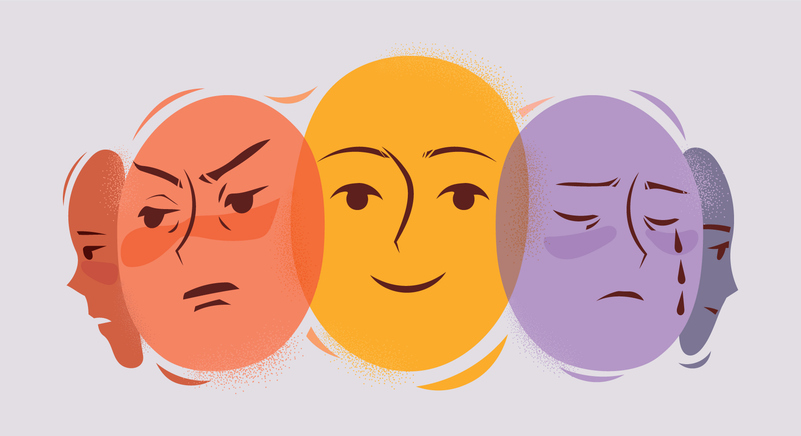
Emotions are what we feel and experience every day. Whether positive or negative, these emotions are a normal part of everyday life. However, for some people these emotions can feel overwhelming and out of control. And when stress strikes, most of us use a variety of unconscious coping mechanisms to effectively manage and respond to it. As a result of this, we are able to adapt to the demands of our stressful environments. But not all these emotion regulation or stress management strategies are healthy. Unhealthy strategies are those that may leave lasting damage, result in unanticipated damage, or lead to avoiding dealing with situations that will inevitably require a head on solution.
Common examples of unhealthy coping mechanisms include:
- Abusing alcohol or other substances
- Self-Injury
- Avoiding or withdrawing from
- difficult situations
- Physical or verbal aggression
- Excessive screen use leading to the exclusion of other responsibilities
- Emotional eating
- Overworking
- Isolation
Common examples of healthy coping mechanisms include:
- Talking with friends
- Exercising
- Journalling
- Meditation
- Therapy
- Taking care of yourself when physically ill
- Getting adequate sleep
- Paying attention to negative thoughts that occur before or after strong emotions
- Noticing when you need a break – and taking it
What causes emotions to be overwhelming?
It’s not the experience of an emotion that leads to overwhelm. Rather, it is the interpretation of the emotion that tends to ratchet up feelings and a sense of not being able to tolerate them, leading to stress and difficulties. This is what psychologists call the “vicious emotional cycle.” According to this cycle, our thoughts, emotions and behaviors are all linked to each other.
For instance, imagine you’ve just finished presenting an important project during a team meeting at work in Hong Kong. After the meeting, your manager leaves the room without saying anything about your presentation. Almost instantly, a rapid stream of emotions begins to surface—uncertainty, disappointment, anxiety, or even embarrassment. These feelings quickly give rise to a series of thoughts: “Did I do a poor job?” “Maybe my manager wasn’t impressed.” “What if I made mistakes that everyone noticed?” “This could affect my next performance review.” Although another part of you wonders whether your manager was simply rushing to another meeting, the uncertainty lingers. As these thoughts continue, your emotions become more intense. You may begin to feel stressed, discouraged, or worried about your future at work. Wanting to escape these uncomfortable feelings, you change your behaviour. You might avoid speaking up in your next meeting, spend hours replaying the presentation in your mind, repeatedly check your emails for feedback, or work late into the night trying to make your next assignment “perfect.” While these behaviours may provide temporary relief or a sense of control, they often reinforce the original thought that you are not performing well enough. The next time a similar situation occurs, the cycle begins again, making self-doubt and anxiety even stronger.
This cycle can become vicious and/or a typical go-to pattern over time unless something is done to change this cycle.
Effective Techniques for Managing Overwhelming Emotions
While some of us use less than ideal strategies to manage stress and overwhelming emotions occasionally, individuals who regularly experience what feels like overwhelming, intense negative emotions are much more likely to rely on unhealthy strategies. So, here are a few techniques to help you shift towards the more healthy options.
Caring for your Physical Needs
To feel satisfied with life, it is important to eat a well-balanced diet, sleep adequately and engage in physical exercise on a daily basis. Restful sleep and healthy food can help us gain a positive perspective and overlook the little things that steal our joy.
Building a Sense of Achievementh
Engage in at least one activity everyday that brings you happiness. It could be dancing, reading, talking to a friend/family member, going to the gym, etc. Doing one positive thing every day can lead to a sense of achievement and contentment. By paying more attention towards the positive, our negative moods can decrease and our positive moods can become daily.Self-Soothing Box
Whenever you are in emotional pain or at the height of distress, your brain is set up to bypass your problem solving capabilities. In such stressful situations, a self-soothing box is what comes in handy. A self-soothing box is something you prepare in advance, when you are able to think through what most helps in times of distress. Grab an old shoe box and fill it with anything that could help to soothe you. Grab an old shoe box and fill it with anything that could help to soothe you when you are in distress. For instance, you can put in an ot saying “Call XYZ friend.” Seeking help may not be our first thought when we are struggling, but following a simple instruction to call a trusted friend can steer us in the right direction. If you find it difficult to talk, your box could include a pen and paper so you can write or doodle to express what is happening. The box could also include lavender oil (or any scent that you associate with comfort), some photographs of people who care about you and whom you care about, and a list of soothing or uplifting music tracks to play. You could keep a tea bag if tea is what helps you calm down.Values Check-In
The next time you feel the need to avoid or escape overwhelming emotions or a stressful situation, take some time to do a value check-in. In order to do that, simply write down the answer to the following questions:
- How does this effort or goal fit with my values?
- What kind of contribution do I want to make?
- What difference do I want to make to others with what I am doing?
- What do I want to stand for during this? What do my efforts mean to me?
Improving your Emotional Vocabulary
The more new words you can build up to differentiate between feelings, the more options your brain has for making sense of various sensations and emotions. When you have a more accurate word for a feeling, this helps to regulate your emotions and in turn means less stress for your body and mind overall. A few ways to build your emotional vocabulary are:
- Be specific when naming an emotion. Go beyond, ‘I am happy’ or ‘I am sad.’ What other words can you use to describe this feeling? Is it a combination of feelings? What physical sensations do you notice?
- There is no right or wrong way to label an emotion. The key is to find a description that you and the people around you can become familiar with. If you can’t find the words, you can make up your own or find words from other languages that don’t have a clear translation.
- When it comes to building up the ability to describe those new experiences, take every opportunity to learn new words. This does not have to only come from books (although it can). It can also come from music, movies and any other place that exposes you to new words to describe how you feel.
- Explore new experiences and play around with ways to describe those experiences. From tasting new foods, to meeting new people, reading books or visiting somewhere new.
- Write down experiences and explore ways to describe how you felt. If you often feel at a loss for words when trying to describe how you feel, and need help to build up your emotional vocabulary, the Feeling Wheel is a great resource for this purpose.
Reframing thoughts
All our emotions are valid. And when it is the interpretation that is the cause of our troubles, reframing thoughts seems like the easier task to accomplish. And thoughts play a crucial role in how we experience a situation. So, the next time a situation is upsetting or overwhelming and your thoughts begin to spiral down the negative staircase, ask yourself:
- What is it that’s really pushing my buttons here?
- Why am I reacting so strongly?
- What’s the worst (or best) that could happen?
- How important will this be tomorrow? Next week? Next month?
If you want, you could also write down your answers to help shift your focus and make your thoughts more tangible.
Focus on the Positive Too
Journalling is a helpful way to process and understand the experiences and emotions that happen to you. But journalling is not only helpful for making sense of difficult experiences. It’s also important to spend time writing about positive experiences, even small moments that felt positive. This is because every action is a specific pattern of neural activity in the brain. When you repeat an activity over and over, that neural pathway is strengthened and becomes easier for your brain to access. So if you want to be able to more easily cultivate positive feelings, thoughts and memories, put in the practice by keeping a journal. When you get practice at cultivating certain feelings and experiences in this way, it gets easier to access those feelings in the future.
Photo Credits: woocat
Citations
Rolston, A., & Lloyd-Richardson, E. (2017). What is emotion regulation and how do we do it. Cornell Research Program on Self-Injury and Recovery, 1(5).
Smith, J. (2022). Why has nobody told me this before? HarperOne.

Sakshi
About the author
Sakshi is a clinical psychologist with a deep passion for understanding human behavior, a strong drive for research, and a keen eye for psychological intricacies. Committed to continuous learning, she seeks to explore every facet of psychology, from theory to practice, to better support and empower individuals. With a curiosity that fuels her pursuit of knowledge, she strives to bridge the gap between research and real-world applications, making psychology more accessible and impactful.
Recently Added
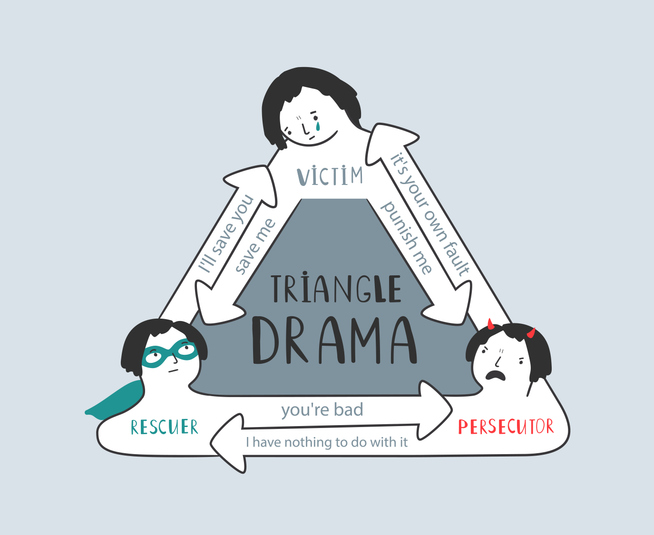
At least once in our lifetimes, we have been involved in or enmeshed in unhealthy and manipulative relationships where we have, knowingly …

The ideal conditions for creativity are often mental and emotional – involving relaxed, yet alert and focused, states of mind. By contrast, …

Spirituality empowers human existence with meaning. It helps establish goals and value systems that drive almost all aspects of a person’s life. …