

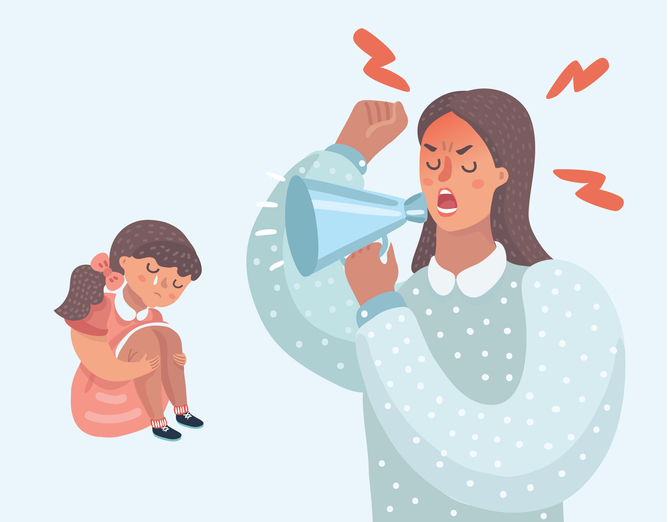
Parents play a major role in teaching their children about developing healthy emotional regulation. They teach their children about emotions by modelling appropriate emotional responses in stressful situations, coaching about the meaning of emotions and their management and teaching about emotional expression. However, more often than not, parental behaviour is dysregulated, leading to the child’s emotional dysregulation.
For example, Sarah comes home after a stressful day at work and finds that her young son is crying because he cannot find his favourite toy. Instead of helping him calm down, she becomes irritated and says, “It’s not a big deal. Stop crying.” Over time, the child may learn that strong emotions are something to suppress rather than understand and manage.
Impact of Parental Emotional Dysregulation on Children
Emotional dysregulation inhibits parents from adjusting their own emotions to long-term parenting goals, affecting their own perception and interpretation of children’s expressions and needs, thereby preventing them from effectively regulating the child. When parents neglect or minimize their children’s emotions, the child may feel over-aroused when experiencing emotions and in turn have fewer skills to deal with negative emotions. Moreover, parents’ own dysregulation may be indirectly related to their child’s dysregulation through parent-child interactions and the quality of parent–child relationship during childhood. Hyperactivating emotion regulation, such as rumination on self-related topics or blaming others, as well as deactivating emotion regulation, such as avoiding (escaping from) emotional situations, typically undermine the effective regulation of children’s needs and can promote the development of problem behavior in children.
Hostility
When fathers exhibit hostile behaviours, children (especially boys) tend to have more externalizing difficulties. Externalizing problems refer to behaviours where negative emotions are directed towards the environment, other people or objects. Externalizing behaviours include aggression, impulsive behaviour, hyperactivity, conduct problems and substance use. Moreover, when parents exhibit hostile and competitive behaviours, children tend to become aggressive and impatient.
For example, when James makes a small mistake while playing with his younger brother, his father reacts harshly and angrily. Over time, James may begin to learn that anger and aggression are acceptable ways of responding when something does not go his way. He may then become more likely to shout, push, or lash out when frustrated with other children.
Parenting Stress
Parenting stress is the emotional strain parents experience when the demands of raising a child feel greater than the time, energy, support, or resources they have to cope with them. When this stress is prolonged and intense, it can lead to parenting burnout. This leads to emotional dysregulation (especially in mothers) and vice versa, thereby impacting the child’s mental health and causing maladjustment. They also increase internalizing (behaviours where the negative feelings are directed inwards towards self rather than outward expression. Examples: anxiety, depression and physical/somatic complaints) and externalizing behaviours among children, creating a cycle wherein high levels of parenting stress evoke more negative reactions and behaviors from the parent, thereby increasing the child’s difficult behaviours until one of the behaviors diminish. Cumulative or increased parenting stress is also associated with harsh discipline or laxness, which is further associated with increased mental health problems in children.
For instance, Emma is balancing a demanding job, household responsibilities, and caring for two young children. After several exhausting weeks, she has less patience when her children argue or refuse to follow instructions. She begins responding with frequent shouting, while the children become more oppositional and difficult to manage. Their behaviour then increases Emma’s stress even further, creating a cycle of parental stress and child dysregulation.
Dysfunctional Parenting
When parents are experiencing emotional dysregulation, it can lead to maladaptive parenting practices such as harsh discipline, punishing or minimizing the child’s emotions, a lack of sensitivity or low cooperation towards the child. When mothers are using suppression to cope with their emotional overwhelm, they tend to be more punitive towards the child’s negative emotions, thereby leading the child to develop unhealthy emotional regulation strategies. Parents who try to push away or suppress their difficult emotions may find it harder to respond sensitively when their child is upset or resistant.
For example, when asking a child to stop playing and clean up, they may struggle to patiently guide and motivate the child, leading to less supportive parenting. This leads the child to have more internalizing and externalizing concerns as they grow into young adults.
Moreover, parents who try to avoid expression or processing their own negative emotions are less able to understand their children’s intentions and needs, sometimes leading to more conflict, defiance, or challenging behaviour in children.
For example, a child may refuse to get ready for school, and an emotionally overwhelmed parent may interpret this as stubbornness or deliberate disobedience. The parent may respond by scolding or punishing the child without considering that the child could be feeling anxious about a test, having difficulty with a peer, or simply feeling overwhelmed. When the underlying emotion is missed, the interaction can quickly turn into a cycle of conflict and resistance.
When parents exhibit more emotional volatility in their interactions or suppress their emotions, children tend to worry about their parent’s availability to provide emotional support, leading them to avoid expressing their own needs for support. This emotional insecurity is linked to increased symptoms of depression and anxiety, as well as greater engagement in problematic and disruptive behaviors.
Children’s Emotional Dysregulation
When parental emotion regulation is maladaptive, their child’s ability to regulate their emotions also goes for a toss. Children with lower emotion regulation abilities struggle to recover from negative emotions and express them adaptively, increasing their risk for internalizing problems. Difficulty in identifying emotions is also linked to higher anxiety and depression. In fact, research suggests that deficits in emotional regulation increases the risk of depression, especially for girls. Child emotion dysregulation also directly predicts difficulties in children’s relationships, potentially exacerbating social and emotional challenges. Given these challenges, difficulties with emotion regulation may create a pattern of emotional and social struggles that further hinder a child’s development.
For example, a child who becomes very upset after being told “no” may find it difficult to calm down, put their feelings into words, or move on from the disappointment. Instead, they may cry intensely, withdraw, become irritable, or lash out. If these patterns happen repeatedly without opportunities to learn how to identify and manage emotions, the child may gradually struggle with emotional control in other areas of life, including school and relationships.
Parental emotional dysregulation can shape how children learn to understand, express, and manage their own emotions. When children repeatedly experience harshness, emotional invalidation, unpredictability, or limited emotional support, they may struggle to develop healthy regulation skills and become more vulnerable to emotional and behavioural difficulties. However, these patterns are not inevitable or irreversible. When parents learn to recognise and regulate their own emotions, respond to their children with greater sensitivity, and model healthy coping, they can help create a more emotionally secure environment that supports the child’s long-term wellbeing.
Photo Credits: cosmaa
Citations
Brouse, V. (2025). The Effects of Parental Emotion Regulation on Child Mental Health. Brigham Young University Scholars Archive. https://scholarsarchive.byu.edu/cgi/viewcontent.cgi?article=1473&context=studentpub
Carrère, S., & Bowie, B. H. (2012). Like parent, like child: Parent and child emotion dysregulation. Archives of psychiatric nursing, 26(3), e23-e30.
Dijk, W. V., de Moor, M. H., Oosterman, M., Huizink, A. C., & Matvienko-Sikar, K. (2022). Longitudinal relations between parenting stress and child internalizing and externalizing behaviors: Testing within-person changes, bidirectionality and mediating mechanisms. Frontiers in Behavioral Neuroscience, 16, 942363.
Iwanski, A., Lichtenstein, L., Paulus, J., Werner, C., Walper, S., Vierhaus, M., Spangler, G., & Zimmermann, P. (2025). Parental emotion regulation and children’s mental health: Longitudinal mediation by parenting stress and sensitive challenging parenting. Personality and Individual Differences, 246, 113262.
Xu, X., Spinrad, T. L., Cookston, J. T., & Matsumoto, D. (2020). The relations of parental emotion dysregulation and emotion socialization to young adults’ emotion dysregulation. Journal of Child and Family Studies, 29(3), 725-737.

Sakshi
About the author
Sakshi is a clinical psychologist with a deep passion for understanding human behavior, a strong drive for research, and a keen eye for psychological intricacies. Committed to continuous learning, she seeks to explore every facet of psychology, from theory to practice, to better support and empower individuals. With a curiosity that fuels her pursuit of knowledge, she strives to bridge the gap between research and real-world applications, making psychology more accessible and impactful.
Recently Added

In a world shaped by trends and social influence, following the crowd has become almost second nature. We want a better balance …
Seeking therapeutic support isn’t the easiest task for any of us. And when families seem to be involved in the mix, it …

Seeking therapeutic support isn’t the easiest task for any of us. And when families seem to be involved in the mix, it …