

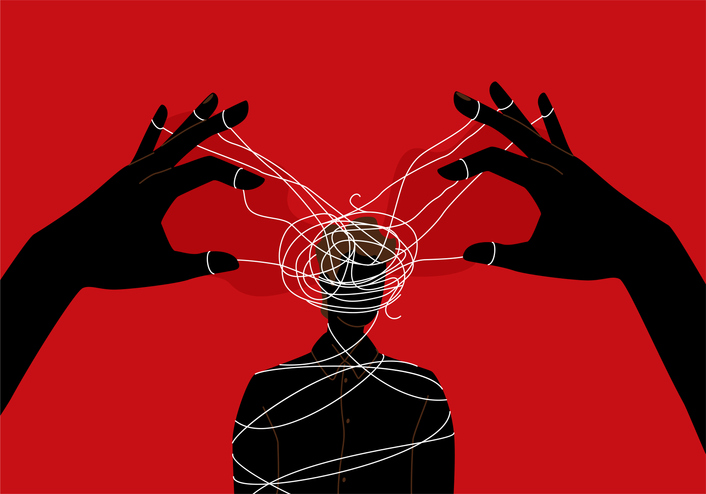
Emotions can be helpful or they can be destructive. The challenge is to find emotional regulation strategies so that we can retain their helpful features while limiting their destructive aspects. However, in this fast-paced world where demands are a constant, healthy emotional regulation seems to have taken a back seat and emotional suppression has become the norm. While they may appear similar on the surface, they operate in fundamentally different ways in the brain and nervous system. One helps people process emotions and return to balance. The other often disconnects individuals from emotional signals without actually resolving them. The difference can be understood through a simple example: healthy emotional regulation is like turning down the volume on an emotion so that you can listen to what it is telling you and decide what to do next. Emotional suppression, on the other hand, is like pressing mute without addressing the source of the sound. The emotion may no longer be visible, but it has not necessarily disappeared.
For example, Emily, a 32-year-old professional living in Hong Kong, had been feeling increasingly stressed because of long working hours and family responsibilities. When she felt overwhelmed, she would immediately tell herself, “I shouldn’t feel this way,” and distract herself by working late or scrolling on her phone. While this helped her avoid the discomfort temporarily, the stress kept returning.
Definition & Meaning
In psychology, emotional regulation is defined as the process of influencing which emotion we experience when they arise and how they are expressed. It is all about recognizing, understanding and responding to our emotions in a way that enhances wellbeing and balance. It helps individuals to maintain balance and respond to their environment constructively. People who regularly use healthy emotional regulation strategies experience better psychological health, stronger relationships, and greater resilience to stress.
On the other hand, emotional suppression is all about masking our internal world, telling ourselves not to feel something, distracting ourselves to steer clear of uncomfortable feelings and to hide our emotions. In many cases, suppression seems to work in the short term. For instance, someone might stop crying, hold back their anger, or suppress nervousness during a professional meeting. However, this method rarely addresses the deeper emotional issues at play. Even when we manage to control our outward expressions, our bodies continue to process those feelings internally, often leading to unresolved emotional turmoil. People who rely heavily on suppression tend to experience lower levels of positive emotion and higher levels of stress.
Brain Response
Our emotional experiences arise from intricate interactions among various brain regions that handle threat detection, memory, and cognitive control. When we engage in healthy emotional regulation (such as cognitive reappraisal), our prefrontal cortex is actively engaged. This helps us reshape our emotional experience, reducing their intensity while having full awareness of what we are feeling.
Consequently, suppression tends to focus on stifling our emotional expressions without really addressing the underlying feelings. This often keeps the amygdala engaged while our bodies work overtime to mask these emotions. Consistent emotional suppression can lead to long-term activation of stress pathways in the body. Rather than calming our nervous systems, suppression often reinforces cycles of tension and emotional disconnect, making it harder to connect with ourselves and others.
For instance, Daniel becomes anxious when his manager asks to speak with him unexpectedly. His first thought is, “I must have done something wrong.” Through healthy emotional regulation, he pauses and consciously reframes the situation, reminding himself that the meeting could simply be a routine discussion. Although he still feels some anxiety, changing his interpretation helps reduce its intensity and allows him to approach the meeting calmly. In contrast, if Daniel tried to suppress his anxiety by forcing himself not to feel nervous or pretending everything was fine, the emotion could remain active beneath the surface even though he appears calm outwardly.
Cognitive Demands
Emotional suppression leads to memory impairment, especially in social situations, while the individual is regulating emotions. This is because the suppressor fails to absorb information needed to respond appropriately to others, appearing avoidant, seemingly not in tune with the subtle ebb and flow of the interaction. Suppression is cognitively taxing for the person using it, as compared to healthy emotional regulation. By disrupting the give and take of emotional communication, suppression has the potential to undermine social functioning to a much greater extent than emotional regulation.
Perspective
Individuals who engage in healthy emotional regulation often look at the silver lining in stressful situations. Rather than getting overwhelmed by an emotion or denying it, they acknowledge what they are feeling and consciously choose how to respond. They identify opportunities for growth, or reframe setbacks as temporary and manageable. On the other hand, those who engage in emotional suppression are less likely to be clearly aware of and to express their upset. While they may appear calm on the outside, they are less likely to be fully aware of what they are feeling and may struggle to express their emotions in healthy ways. Instead of resolving emotions, suppression often postpones them, allowing them to resurface later with greater intensity.
For example, after receiving constructive criticism at work, someone practising emotional regulation may initially feel disappointed but later reflect on the feedback and use it to improve. Someone relying on suppression may insist that the criticism “doesn’t bother me,” only to become unusually irritable with family members later that evening because the underlying emotion was never processed.
Physical Health
Our emotions affect not only our mental wellbeing but also our physiological health. It impacts the endocrine, immune and cardiovascular systems because when emotions are suppressed for a long time, our body remains in a constant state of physiological activation. Research has linked chronic emotional suppression to increased cortisol levels, sleep disturbances, poor immune functioning, high blood pressure, headache and greater risk of stress-related conditions. While suppression itself does not directly cause disease, long-term activation of the body’s stress response may increase vulnerability to both physical and psychological health problems. In contrast, healthy emotional regulation helps the nervous system to return to baseline after a stressful incident. Techniques such as mindfulness, cognitive reappraisal, diaphragmatic breathing, and self-compassion activate the parasympathetic nervous system, promoting recovery and reducing prolonged physiological stress.
Relationships
Emotions play a crucial role in human connection. Facial expressions, tone of voice, and body language help others understand our experiences and respond with empathy. Emotional suppression interrupts this natural exchange. When people consistently hide their emotions, others may perceive them as distant, cold, or difficult to read. Loved ones may struggle to understand what they need, leading to misunderstandings and emotional disconnection. Ironically, suppressing emotions to avoid conflict often creates more conflict because important feelings remain unspoken. Healthy emotional regulation strengthens relationships because it encourages honest yet balanced emotional expression. Rather than reacting impulsively or shutting down completely, emotionally regulated individuals can communicate their feelings respectfully while remaining open to listening.
For example, instead of saying nothing after feeling hurt by a friend’s comment, a regulated response might be, “I know you probably didn’t mean to upset me, but I felt hurt by what was said.” This creates an opportunity for understanding rather than resentment.
Healthy emotional regulation and emotional suppression may appear similar because both can reduce outward emotional expression. However, what happens internally is very different. Emotional regulation helps us understand, process, and respond to emotions in ways that support wellbeing, healthier relationships, and long-term resilience. Emotional suppression, by contrast, attempts to hide emotions without addressing them, often increasing physiological stress and emotional disconnection over time. The goal is not to stop feeling emotions but to build a healthier relationship with them. Every emotion carries valuable information. When we learn to listen instead of silencing them, emotions become guides rather than obstacles, helping us navigate life’s challenges with greater clarity, flexibility, and resilience.
Photo Credits: Tatianazaets
Citations
Butler, E. A., Egloff, B., Wilhelm, F. H., Smith, N. C., Erickson, E. A., & Gross, J. J. (2003). The social consequences of expressive suppression. Emotion, 3(1), 48–67.
Espinoza, I. (2026). Emotion Regulation vs Emotion Suppression: Why the Difference Matters for Mental Health. Niroga Institute. https://www.niroga.org/blogs/mental-health/emotion-regulation-vs-emotion-suppression?srsltid=AfmBOortSPqJL3bMVXTo9qSZKNv2JwCdAc4fdSSXb7hSJYda3lpWHhuR
Gross, J. J. (2015). Emotion regulation: Current status and future prospects. Psychological Inquiry, 26(1), 1–26.
Gross, J. J., & John, O. P. (2003). Individual differences in two emotion regulation processes: Implications for affect, relationships, and well-being. Journal of Personality and Social Psychology, 85(2), 348–362.
John, O. P., & Gross, J. J. (2004). Healthy and unhealthy emotion regulation: Personality processes, individual differences, and life span development. Journal of personality, 72(6), 1301-1334.
Ochsner, K. N., & Gross, J. J. (2005). The cognitive control of emotion. Trends in Cognitive Sciences, 9(5), 242–249.
Tyra, A. T., Fergus, T. A., & Ginty, A. T. (2024). Emotion suppression and acute physiological responses to stress in healthy populations: a quantitative review of experimental and correlational investigations. Health psychology review, 18(2), 396–420.

Ruchi Om
About the author
Ruchi Om is the founder of ‘the mind talk’ and a counsellor registered with ACA. She believes that the road to personal growth and development might prove challenging at times but it is worth it. She believes that we all have agency and we must move forward in life with intention and purpose. In addition, she continues to specialise in learning and training in classrooms and trains parents in the art of parenting and conflict management.
Recently Added

In a world shaped by trends and social influence, following the crowd has become almost second nature. We want a better balance …
Seeking therapeutic support isn’t the easiest task for any of us. And when families seem to be involved in the mix, it …

Seeking therapeutic support isn’t the easiest task for any of us. And when families seem to be involved in the mix, it …