

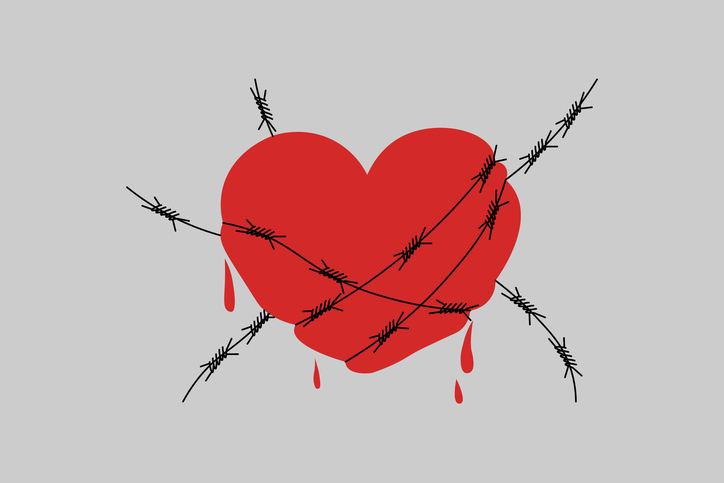
Relationships are an integral part of what makes us human. But not all of these help us thrive. Sometimes, the qualities that you are lauded for are the very qualities because of which you remain stuck in a relationship that is destroying you. You go from being your partner’s hero to being someone who is treated with indifference and contempt. You begin walking on eggshells around them, constantly trying to solve problems alone and stay loyal because that is all you have ever known. Your friends badger you to leave, but you continue to stay, not understanding what is stopping you from just walking out. This is what a toxic relationship looks like. And staying becomes harmful when loyalty, hope, or the desire to make things work begins to cost you your boundaries, wellbeing, and sense of self.
Trauma Bonding
Toxic relationships do not only refer to relationships involving abuse. They can also include unhealthy patterns such as repeated manipulation, dishonesty, emotional instability, poor boundaries or ongoing behaviour that causes distress and undermines a person’s wellbeing. Even within a toxic relationship, there may still be affection, laughter, convincing apologies, promises to change and reminders of the person they first loved. When things briefly improve, it can feel like evidence that the relationship can be saved. Even in abusive relationships, periods of fear or harm may alternate with apologies, affection and calm. The relief that follows a distressing incident can be powerful, and that partner may come to feel like both a source of fear and a source of comfort. This can contribute to a trauma bond where unpredictability strengthens attachment and hope, making it harder to know which version of the relationship is “real.” They may tell themselves to focus on the good, explain the harm as stress or “a bad day,” and believe things will improve if they try harder. However, the hope of their partner;s caring version rarely ever lasts.
For example, after a major argument, Maya’s partner may insult her, threaten to leave and refuse to speak to her. The next day, however, he may apologise, become affectionate and promise that it will never happen again. Maya feels relieved and reassured, remembering the loving version of him she knows. When the same pattern repeats, she may continue holding on to the good moments and believing that the relationship can return to how it was in the beginning.
Anxious Attachment
Another reason why staying in a harmful relationship can become difficult to recognise is anxious attachment. When a person has a strong fear of losing their partner or depends heavily on the relationship for emotional security, the possibility of separation can feel overwhelming. The thought of being alone, being abandoned, or losing the person they are emotionally attached to may feel more painful than the problems they are experiencing within the relationship. As a result, they may become highly focused on maintaining the relationship, even when their own emotional needs are repeatedly overlooked.
For example, Paige may recognise that her partner frequently dismisses her feelings and makes her feel insecure, but the thought of ending the relationship may immediately bring intense fear. She may worry, “What if I never find someone else?” or “What if I regret leaving?” After an argument, even when she knows she has been hurt, she may be the one to reach out first because restoring the connection feels more important than addressing what happened. Over time, her fear of losing the relationship may lead her to repeatedly put her own emotional needs aside.
Loyalty
When being loyal means pushing your boundaries and testing how much you will tolerate, your staying is becoming toxic. A toxic partner knows that your loyalty will make you find a way, no matter how hard it gets. They know you will adapt and endure and stand by the one you love. This slowly morphs into accepting the unacceptable. When someone consistently disrespects your boundaries, dismisses your feelings, or treats you as an emotional punching bag, staying isn’t loyalty — it’s enabling. And they’re counting on your sense of honor to keep you trapped while they continue the abuse. Your loyalty may be your strength, but in the hands of someone toxic, it is permission to treat you poorly.
For example, Sarah may repeatedly excuse her partner’s hurtful behaviour by telling herself, “He is going through a difficult time, and I need to stand by him.” Even when he repeatedly crosses boundaries or speaks to her disrespectfully, she may feel guilty about leaving because she believes that a loyal partner does not give up. Over time, loyalty can become a reason for tolerating behaviour that is damaging her emotional wellbeing.
Loss
Even though a relationship is harmful, there may be periods of attachment, moments of genuine care and meaningful memories. Therefore, when it comes to walking out of a toxic relationship, it feels like a loss. Losing a person they are deeply attached to. Losing a home, a routine, family. Losing an imagined future. Losing a role or identity. Losing financial stability. Losing years of emotional effort and sacrifice. Some people want to deeply hold on to the better parts while foregoing the worse, bringing them to a crossroad. However, the damage that is done over the years remains along with the one that is to come.
For example, Emma may know that her relationship has become emotionally harmful, but leaving would mean giving up the home they built together, the routines they shared and the future she had imagined with her partner. She may find herself thinking about their early years together, family holidays and the times when he was caring towards her. The relationship may therefore feel difficult to leave not because the present is healthy, but because she is also grieving everything she hoped it would become.
Lack of Trust
Supportive communication refers to “verbal and nonverbal behavior produced with the intention of providing assistance to others perceived as needing that aid.” Across various interpersonal relationships—such as friendships, romantic partnerships, and parent-child relationships—individuals frequently engage in social interactions that offer support to those experiencing negative emotions caused by stressful events, myriad upsets, and hassles that arise in everyday life. Through this type of communication, individuals receive supportive messages that work on their cognitive mechanism and help them change their negative emotions. It aids distressed recipients by facilitating their emotion regulation through conversationally induced reappraisal.
For instance, Daniel was feeling anxious after receiving unexpected criticism at work and began worrying that he was not good enough at his job. When he shared this with his friend Oliver, Oliver did not simply tell him to “stop worrying.” Instead, he listened, acknowledged how difficult the experience felt, and helped Daniel consider another perspective: “Maybe your manager’s feedback was about one specific task rather than your overall ability.” This supportive conversation helped Daniel reappraise the situation and feel less overwhelmed by his negative emotions.
Lack of Trust
When you are repeatedly blamed, criticised, manipulated or gaslighted, you start to question your reality. You begin to think of everything as an overreaction. You blame yourself for every mistake. You start to feel unwanted. You believe that coping by yourself would be the worst thing in the world, something you wouldn’t be able to do. You trust their version of events more than yours. You lose confidence in your judgment and rely on the same partner to define what happened, whether their feelings are reasonable and what to do next. What looks like passivity, indecision or denial may reflect eroded confidence, restricted independence or narrowed access to other perspectives.
For example, whenever Olivia tells her partner that something he said hurt her, he may respond by saying that she is “too sensitive” or that she is remembering the situation incorrectly. After hearing this repeatedly, Olivia may begin questioning herself before raising concerns. She might think, “Maybe I am making a big deal out of this,” and eventually stop trusting her own emotional responses. What began as disagreements about specific incidents can gradually affect her confidence in her own judgment.
Leaving a toxic relationship is rarely as simple as deciding to walk away. Attachment, loyalty, hope, fear, loss, and diminished self-trust can all make staying feel safer than leaving, even when the relationship is causing harm. But love should not require the repeated surrender of your boundaries, identity, or emotional wellbeing. When constantly holding on leaves you depleted, disconnected, and experiencing emotional burnout, it may be time to look beyond the good moments and recognise the pattern as a whole. Choosing to leave does not mean you failed to love someone; sometimes, it means you have finally chosen to protect yourself.
Photo Credits: Denis Novikov
Citations
Annabelle Psychology. (2026). Why people stay in toxic relationships: Reasons and support. Annabelle Psychology. https://www.annabellepsychology.com/articles-and-guides/why-people-stay-in-toxic-relationships
Hafizha, R., & Selian, S. N. (2026). Anxious Attachment as a Factor in Individual Survival in Toxic Relationships: A Phenomenological Study. Fathana, 4(2), 73-90.
O’Donnell, A. (2025). Why Strong People Stay in Toxic Relationships. Medium. https://medium.com/@adamodonnell_60250/why-strong-people-stay-in-toxic-relationships-79ffcf227d8b

Ruchi Om
About the author
Ruchi Om is the founder of ‘the mind talk’ and a counsellor registered with ACA. She believes that the road to personal growth and development might prove challenging at times but it is worth it. She believes that we all have agency and we must move forward in life with intention and purpose. In addition, she continues to specialise in learning and training in classrooms and trains parents in the art of parenting and conflict management.

Sakshi
About the author
Sakshi is a clinical psychologist with a deep passion for understanding human behavior, a strong drive for research, and a keen eye for psychological intricacies. Committed to continuous learning, she seeks to explore every facet of psychology, from theory to practice, to better support and empower individuals. With a curiosity that fuels her pursuit of knowledge, she strives to bridge the gap between research and real-world applications, making psychology more accessible and impactful.
Recently Added

Spirituality empowers human existence with meaning. It helps establish goals and value systems that drive almost all aspects of a person’s life. …

In a world shaped by trends and social influence, following the crowd has become almost second nature. We want a better balance …
Seeking therapeutic support isn’t the easiest task for any of us. And when families seem to be involved in the mix, it …