

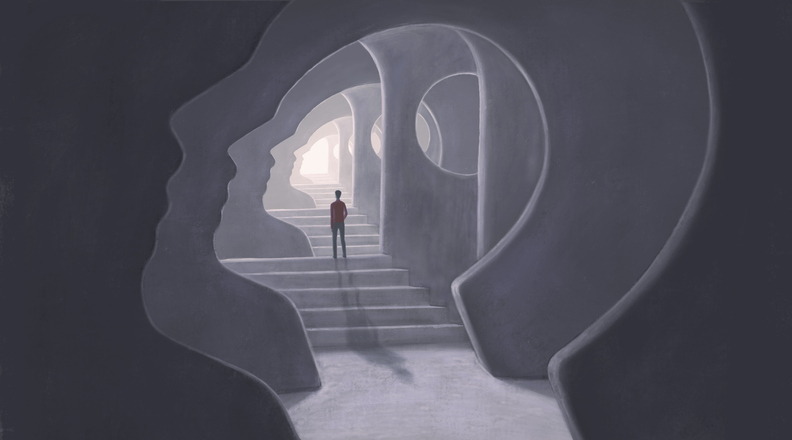
Spirituality empowers human existence with meaning. It helps establish goals and value systems that drive almost all aspects of a person’s life. It is also widely considered as one of the dimensions of wellness. But is it all good with no drawbacks? Or does it have a shadow side that we have overlooked? So, let’s look at whether spirituality is an armor in our arsenal or just a defense we use to escape the pain.
Spiritual Bypassing
Coined by a transpersonal psychotherapist and Buddhist practitioner named John Welwood in the year 1984, spiritual bypassing is defined as the use of spiritual practices and beliefs to avoid dealing with our painful feelings, unresolved wounds and developmental needs. It is more common than we tend to admit and so pervasive that it goes unnoticed (except when it is in its extremes). People often use spirituality as a shield or defense mechanism to dismiss hard emotions or confront unresolved issues. Because as humans, we seek immediate gratification and avoid pain. While it may protect us from harm or promote harmony, it doesn’t solve the issue. It is just a superficial way of glossing over the problem, making us feel better in the short-term but leaving the problem to linger on.Causes of Spiritual Bypassing
Humans often tend to not have much tolerance for pain, preferring pain-numbing solutions regardless of how much suffering such remedies may cause. Because this preference is so thoroughly rooted in our culture, spiritual bypassing fits alarmingly well into our collective habit of turning away from what is painful. The possible reasons why people experience spiritual bypass are:Escape
One of the biggest causes of spiritual bypassing is the desire to escape pain. When life becomes overwhelming, finding something that provides immediate comfort can be a relief. Meditation, prayer, religious practices or spiritual teachings may temporarily make the pain easier to carry. In fact, participants of qualitative research have mentioned turning towards spirituality when they were experiencing distress, sadness, emptiness or difficult life circumstances. While there is nothing wrong with seeking comfort, spirituality only sometimes works as a ‘short-term’ coping strategy during periods of extreme distress. The difficulty begins when temporary relief becomes a long-term way of avoiding the problem. The emotion is still there, even if we have found a beautiful way of talking around it.Low Tolerance
Another cause of spiritual bypassing can be a low tolerance for emotional pain. Some people may find difficult emotions so uncomfortable that they quickly try to replace them with positivity, acceptance or spiritual explanations. Instead of saying, “I am angry and something about this situation needs to change,” they may tell themselves, “I should simply forgive and let go.” This can sound peaceful on the outside, but internally, the emotion may still remain unresolved.Difficult Environments
Difficult family or social environments are another factor that push people to use spiritual bypassing as a defense mechanism. For some individuals, spirituality becomes a way of coping with painful family histories and complicated relationships. The social environment surrounding a person can matter too, especially when a community discourages psychological growth or presents spiritual development as an alternative to dealing with emotional needs.Religious/Spiritual Leaders and Communities
Spiritual leaders and communities can also influence spiritual bypassing. This does not mean that spiritual communities are inherently harmful. Rather, when teachings discourage people from acknowledging psychological difficulties, they may unintentionally reinforce avoidance. Some researchers have specifically identified the influence of leaders and communities whose practices encouraged people to focus heavily on spirituality while neglecting psychological development.Signs of Spiritual Bypassing
Spirituality can offer hope, calm, and a sense of connectedness. But it can often be used to mask parts of yourself that you’re not willing to deal with. Where true healing delivers a sense of peace and acceptance about yourself and the world you live in, spiritual bypassing is a denial of some part of yourself, and the peaceful exterior is a defence mechanism used to avoid the truth.
- Jumping to forgiveness, gratitude or higher meaning before feeling the grief
- Using of spiritual language to avoid difficult emotions such as shame, anger, fear or accountability
- Projecting negative feelings onto others
- Feelings of detachment
- Dismissing pain rather than meeting it honestly
- Avoiding hard conversations by calling everything a lesson to be learnt; thinking traumatic events must be learning experiences or have a positive side
- Mistaking transcendence for healing and numbness for peace
- Holding very high (and often unrealistic) ideals
- Feeling detached from the body while sounding very aware or enlightened
- Clinging to ritual, channeling or devotion while daily life becomes dysregulated
- Believing you are spiritually superior to hide insecurities
- Secretly feeling tired and exhausted because the spiritual language isn’t healing the wound
- Focusing only on spirituality and ignoring the present
- Assuming that meditation and prayer are always positive
- Believing people can overcome issues through positive thinking
- Using denial and repression
For instance, imagine someone repeatedly being hurt by another person but refusing to set a boundary because they believe they should always be compassionate and forgiving. On the surface, this might look like emotional maturity. But if forgiveness is being used to avoid anger, disappointment or the need for a boundary, it can actually keep the person stuck.
Impact of Spiritual Bypassing
Spiritual bypassing creates a paradox: the very tools that are meant to foster growth become the ones that prevent it. When you repeatedly use spiritual concepts to avoid difficult emotions, you set in motion a series of psychological processes that compound over time. Over time, spiritual bypassing can affect emotional development, relationships, everyday responsibilities, and even the way a person understands themselves.
Emotional Disconnection
One of the biggest impacts of spiritual bypassing is becoming disconnected from difficult emotions. A person may feel that anger, sadness, fear or grief are emotions they should rise above rather than experience. Instead of processing what they feel, they may quickly replace it with positivity, acceptance or spiritual explanations. This can make it harder to understand what the emotion is trying to communicate.Stagnant Personal Growth
Avoiding uncomfortable experiences can also interfere with psychological growth. When a person repeatedly uses spirituality to move away from difficult parts of themselves, there is less opportunity to understand their patterns, needs and vulnerabilities. This is a form of arrested or stalled development, where spiritual growth may continue on the surface while important psychological work remains unfinished.Difficulty in Relationships
Spiritual bypassing can create problems in close relationships too. Someone may avoid confrontation because they believe that conflict is negative or “unspiritual.” They may tolerate inappropriate behaviour, struggle to set boundaries or stay in unrealistic relationships because they want to remain compassionate and accepting. Over time, this can create resentment, disconnection and unhealthy relationship patterns.Isolation
Some people experiencing spiritual bypassing may begin distancing themselves from people they consider too negative, materialistic or “unspiritual.” While having boundaries around certain environments can be healthy, completely avoiding people who think or feel differently can lead to isolation.Loss of Self-Awareness
Spiritual bypassing can sometimes make it difficult to recognise one’s own less comfortable qualities. A person may strongly identify with being peaceful, compassionate or spiritually evolved and therefore struggle to acknowledge anger, jealousy, insecurity or other parts of themselves. This is known as the difficulty in acknowledging the “shadow” side of oneself. Without this awareness, it becomes harder to genuinely understand and change unhealthy patterns.Neglecting Everyday Responsibilities
Spirituality can become so central that ordinary responsibilities start being overlooked. One may face difficulties involving work, finances and family responsibilities. The desire to escape the demands of everyday life may feel liberating initially, but practical responsibilities still need attention. Avoiding them can create additional stress rather than genuine freedom.Loss of Self-Compassion
Interestingly, spiritual bypassing can also affect the relationship a person has with themselves. When someone believes they should always be peaceful, positive or spiritually aware, normal human struggles can begin to feel like personal failures. Instead of offering themselves compassion, they may judge themselves for experiencing difficult emotions in the first place. Loss of self-love is one of the drawbacks of this phenomenon.False Sense of Relief
Perhaps what makes spiritual bypassing difficult to recognise is that it can actually feel helpful in the beginning. Spiritual beliefs or practices may provide temporary relief from emotional pain, a sense of meaning, or even a feeling of transcendence. Because the person feels better for a while, the pattern can become reinforcing. However, if the underlying psychological concerns remain unaddressed, the relief may not last.
Spirituality can offer meaning, comfort, connection, and hope, but healing requires more than finding a way to feel peaceful. Spiritual bypassing begins when spiritual beliefs or practices become a way of avoiding grief, anger, accountability, difficult conversations, or unresolved wounds. Real healing asks us to acknowledge what hurts, understand where it comes from, and gradually learn healthier ways of responding to it. Spirituality can be a meaningful part of that journey, but it works best when it helps us move towards ourselves rather than away from what we are experiencing. Sometimes, healing does not mean rising above the pain; it means having the courage to face it, process it, and eventually make space for something new.
Photo Credits: Jorm Sangsorn
Citations
Cherry, K. (2026). Spiritual bypassing as a defense mechanism. VeryWell Mind.
https://www.verywellmind.com/what-is-spiritual-bypassing-5081640
Masters, R. A. (2010). Spiritual bypassing: When spirituality disconnects us from what really matters. North Atlantic Books.
Picciotto, G., Fox, J., & Neto, F. (2017). A phenomenology of spiritual bypass: Causes, consequences, and implications. Journal of Spirituality in Mental Health, 20(4), 333–354.

Sakshi
About the author
Sakshi is a clinical psychologist with a deep passion for understanding human behavior, a strong drive for research, and a keen eye for psychological intricacies. Committed to continuous learning, she seeks to explore every facet of psychology, from theory to practice, to better support and empower individuals. With a curiosity that fuels her pursuit of knowledge, she strives to bridge the gap between research and real-world applications, making psychology more accessible and impactful.
Recently Added
Spirituality empowers human existence with meaning. It helps establish goals and value systems that drive almost all aspects of a person’s life. …

In a world shaped by trends and social influence, following the crowd has become almost second nature. We want a better balance …
Seeking therapeutic support isn’t the easiest task for any of us. And when families seem to be involved in the mix, it …