

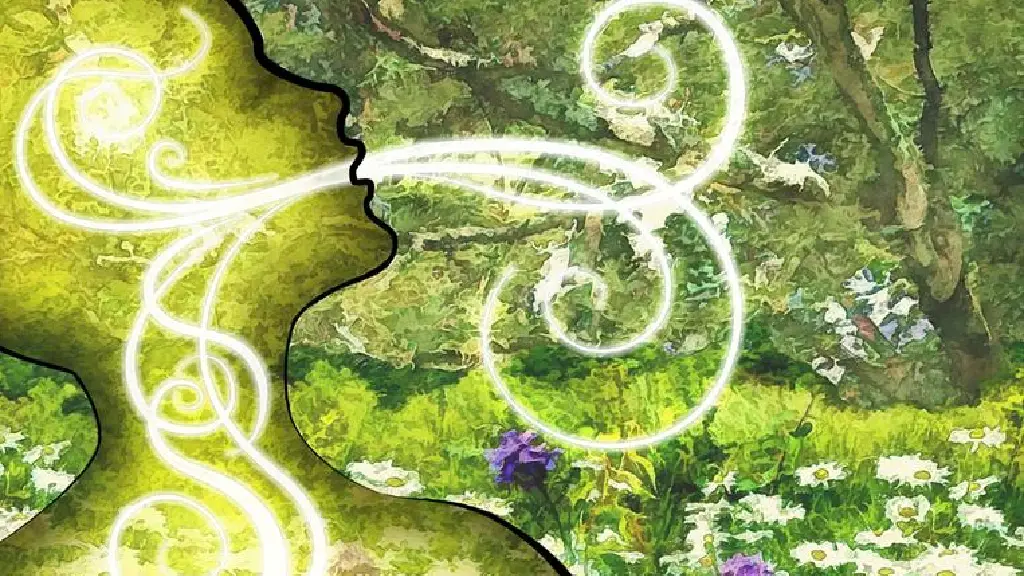
With urbanization on the rise, humans’ long-standing ties to nature have severely declined. More people stay in the urban areas rather than the rural areas leading to urban pollution, physical inactivity, reduced dietary quality, increased psychological stress, and income inequality, etc. Studies have also shown that depression, anxiety, loneliness and other psychological problems are more prevalent in urban areas. Therefore, bringing back the connection to our roots is of utmost importance today. Since the time of our ancestors, humankind has spent the vast majority of its time in natural environments, especially forests. This prolonged coexistence has forged an innate bond with nature (including forests) that remains a stable, enduring characteristic of human psychology, even as modern lifestyles pull us away from it. Across nearly all cultural systems, green—the color of forests and nature—symbolizes hope and health, highlighting how this connection is woven into human cognition. That is how forest therapy comes into the picture. It refers to people consciously entering the forest ecosystem under professional guidance (as needed), and deeply interacting with the natural elements in the forest through multiple sensory means, to establish a connection with nature, relieve psychological stress, regulate physiological indicators, and enhance overall health and well-being. Further, it is an evidence-based natural intervention approach with the core goal of promoting physical and mental health, including mindfulness.
History of forest therapy
Since the 1970s, the Japanese had seen an increase in stress-related illnesses and anxiety due to longer working hours and urbanisation. This had led to a growing interest in finding ways to reconnect with nature. This led to the development of a therapeutic practice known as ‘Shinrin-yoku’ in response to rapid urbanisation and technological advancements in Japan. ‘Shinrin-yoku’ literally translates as ‘taking in the forest atmosphere’ or ‘forest bathing’ and is a term ‘Shinrin-yoku’ coined by the Japanese Ministry of Agriculture, Forestry, and Fisheries in 1982. This concept of forest bathing drew inspiration from the ancient Shinto and Buddhist practices that emphasize the spiritual and healing qualities of nature as well as the Japanese cultural traditions and beliefs of the restorative powers of nature. Forests hold a special place in Japanese culture, often associated with tranquility, beauty, and spiritual renewal. Forest bathing also incorporates other elements of traditional Japanese culture, such as the appreciation of natural beauty and the practice of mindfulness. Today, these traditions form the foundation of modern forest therapy practices around the world.
The process
There is no single practice that can be officially called as the process of ‘Forest Therapy.’ Forest therapy is a dynamically developing practice based on the general principle that it is beneficial to spend time bathing in the atmosphere of the forest. In fact, many cultures have a long tradition of this. While there may be multiple iterations of forest therapy, most of them are generally based on the following guidelines:
- There is a specific intention to connect with nature in a healing way. This requires one to move through the forest landscape in ways that cultivate mindfulness and presence, open all their senses and communicate with the land. This combination of mindfulness and forest therapy is central to the experience.
- This isn’t a practice that can be rushed. The primary goal of Shinrin Yoku walks is not physical exercise. They are about being here rather than getting somewhere.
- Healing interactions require generous giving of our attention. Guided walks encourage the spontaneous emergence of a natural state of mindfulness through a series of ever-changing and evolving invitations. These invitations are all crafted to slow us down and open our senses. As a result, one begins to perceive more deeply the constant stream of communication that is present in any natural setting. We learn to allow the land and its messages penetrate into our minds more deeply.
- It’s not a one-time event. Developing a meaningful relationship with nature occurs over time, and is deepened by returning again and again throughout the natural cycles of the seasons. Forest therapy is best thought of as a practice, similar to yoga or exercise or daily walking.
- Apart from the walks, there are other core routines that we can do that will help in our deepening relationship with nature and providing health benefits. Among these practices are sit spot, place tending, acquiring nature knowledge, and engaging the active imagination through play, creative expression, and imaginal dialogues with other-than-human beings such as animals, trees, stones, and rivers. These activities naturally cultivate mindfulness while strengthening the benefits of forest therapy.
These five elements put together provide a framework for forest therapy. From this common foundation, one can develop their own way.
Scientific Impact on wellbeing
Forest therapy has health-promoting benefits and therapeutic effects on both the mind and body. The perceived values of aesthetics, biodiversity, sustaining life, spirituality, recreation, sense of place, and healing promote psychological health and personal wellbeing effects.
- Cardiovascular System: Forest-based interventions have positive effects on blood pressure and heart and pulse rates.
- Neurotransmitters: The sense of observation, experience and interaction in the forests can stimulate individuals’ curiosity and desire for exploration, which in turn induces the secretion of dopamine and helps to enhance individuals’ sense of wellbeing and satisfaction. The mindfulness cultivated during forest therapy may further strengthen these effects.
- Respiratory, Circulatory and Immune System: Forest therapy may help alleviate inflammation in the small airways of the human body, thereby promoting the improvement of respiratory health. Vegetation in this environment absorbs air pollutants such as haze and reduces the damage of pollutants to the respiratory tract. Additionally, forest therapy contributes to immune responses and enhances the ability to regulate immune cell activity.
- Stress: Forest therapy is also known to show improvement in overall stress levels after intervention. Stress perception significantly improves and stress hormones drop in those that engage in forest-based interventions.
- Anxiety and Depression: symptoms of depression and anxiety have been proven to decrease more in the forests rather than the city. Research suggests that forest therapy and mindfulness practices in natural settings can support emotional wellbeing and psychological recovery.
- Negative Emotions: A decrease in negative emotions (namely, anger and aggression) in children and adults have drastically decreased after engaging in forest therapy.
- Relaxation and Concentration: Forest therapy may also induce varying degrees of relaxation and concentration effects. This supports the idea that green spaces have restorative effects on an individual’s physical and mental health. The forest environment, characterized by low-to-moderate sound pressure levels, is relatively quieter, and its auditory stimuli primarily originate from bird sounds in the forest, which is more conducive to improving human concentration.
Practitioner course
“The forest is the therapist, the guide opens the doors.”
This is the motto that most forest therapy programs abide by. They believe that the forest carries the wisdom and offers the healing that each individual requires. And as a first therapy guide, one works in partnership with the forest, supporting others in awakening their senses and slowing down to be fully present in the moment through mindfulness. The sole aim of guided activities is to create and sustain safe, meaningful, and relational contact between participants and nature. The forest therapy practitioner’s course is usually a mindfulness-based experiential training program that is offered online or in-person by various institutes (Association of Nature and Forest Therapy; The Forest Therapy School; Forest Therapy Hub; INFTA, etc.) around the world. It helps deepen your connection with the living world and offer you the skills necessary to step into your role as a forest therapy guide while integrating the principles of mindfulness into your practice.
In a world that is becoming increasingly fast-paced, digital, and disconnected from nature, forest therapy offers a simple yet powerful way to restore balance. By slowing down, engaging the senses, and cultivating mindfulness in natural environments, individuals can improve their emotional, physical, and psychological well-being. Whether practised independently or with a trained guide, forest therapy encourages a deeper relationship with nature and ourselves, making it a valuable tool for stress reduction, healing, and long-term wellness. Through regular practice, mindfulness becomes less of a technique and more of a natural way of experiencing the world around us.
Photo Credits:
First image: DonkeyWorx
References
Asher, H. (2023). The origins of forest bathing. Forest Healing. https://forest-healing.co.uk/articles/the-origins-of-forest-bathing
Clifford, M. A., & Page, B. (2019). The ANFT Way of Forest Therapy. Association of Nature & Forest Therapy Guides & Programs. https://anft.earth/wp-content/uploads/2024/07/The-ANFT-Way-of-Forest-Therapy.pdf
Liu, Z., & Shen, S. (2026). Forest therapy as a public health tool: A bibliometric analysis of global research trends and future directions. Forest Science and Technology, 1-13.
Stier-Jarmer, M., Throner, V., Kirschneck, M., Immich, G., Frisch, D., & Schuh, A. (2021). The Psychological and Physical Effects of Forests on Human Health: A Systematic Review of Systematic Reviews and Meta-Analyses. International Journal of Environmental Research and Public Health, 18(4), 1770.
Wan, R., Wan, R., & Qiu, Q. (2024). Progress and prospects of research on the impact of forest therapy on mental health: A bibliometric analysis. Forests, 15(6), 1013.
Zhang, P., Cui, Y., Liu, R., Zhao, Y., Su, W., Zhao, L., Wang, X., Deng, L., Wang, B., Li, J., Yang, Y., Chen, M., Guo, W., Song, L., Zhang, Q., Xie, F., Cao, S., Wang, G., Zhang, T., . . . Li, X. (2025). Immediate health and wellbeing benefits of short-term forest therapy for urban healthcare workers: a case study in Giant Panda National Park with cultural ecosystem services. Frontiers in Psychology, 16, 1630999.

Sakshi
About the author
Sakshi is a clinical psychologist with a deep passion for understanding human behavior, a strong drive for research, and a keen eye for psychological intricacies. Committed to continuous learning, she seeks to explore every facet of psychology, from theory to practice, to better support and empower individuals. With a curiosity that fuels her pursuit of knowledge, she strives to bridge the gap between research and real-world applications, making psychology more accessible and impactful.
Recently Added
With urbanization on the rise, humans’ long-standing ties to nature have severely declined. More people stay in the urban areas rather than …

You can’t pour from an empty cup – The Antidote for Empathy Fatigue When you’re constantly the source of advice, caregiving and …

Menopause is an inevitable part of every woman’s life. It’s the period that begins one year after the final menstrual period and …