


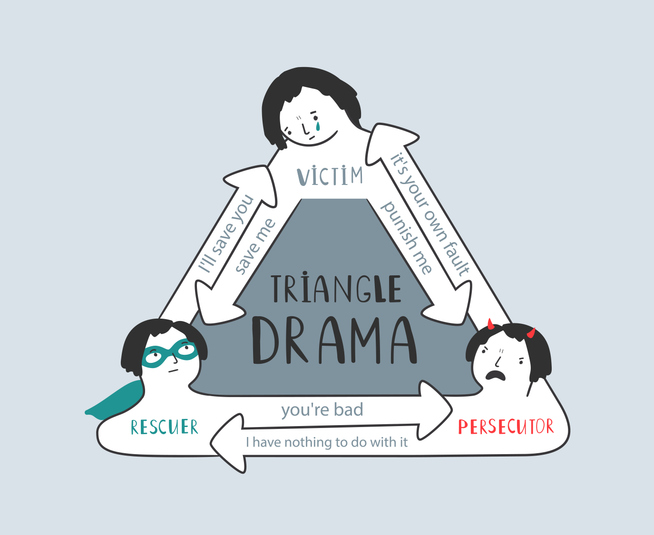
Whether we like it or not, a divide exists in our society between various groups based on ethnicity, race, socio-economic levels, gender and sexual identity, religion, political affiliations, geographic regions, urban, suburban and rural setting, etc. This may be because many individuals are inclined towards associating with people who are socially similar to them, thereby undermining efforts to foster inclusivity. This fragmentation increases when different parts of the community isolate themselves from one another – sometimes to the point where there exists very minimal or no interaction between them. These subparts then become alienated from one another, undermining any real desire for interaction and understanding. These fallouts from fragmentation undermine efforts to pursue the collective good because each group is concerned primarily with their own wellbeing and often hold zero space for solutions.This leads to:
- Dehumanization
- Power struggles
- Violence
- Imposition of personal will and vision
- Spreading false rumors or information
Therefore, looking at our current social reality, the need to bridge social divides is urgent and of utmost importance.
Fostering Inclusivity
Fostering inclusivity involves the adoption of practices that create environments where all individuals feel respected, valued and empowered to contribute to their full potential, regardless of their background, experiences, or identity. It includes the promotion of diversity and ensuring that people from all walks of life have equal opportunities and a sense of belonging. When inclusivity becomes a cornerstone, it creates lasting change.
Coalitions
Social fragmentation can be addressed most effectively at the organizational level via coalitions. Coalitions provide unique contexts that can:
- Bring together diverse populations at scale
- Facilitate bonding through bridging cultural activities
- Provide space to understand and appreciate the diverse circumstances and needs of various social groups.
Bridging social divides at the organizational level via coalitions provides a critical component for stitching our society back together, cultivating shared understanding, and collectively addressing the challenges we face. It provides sufficient flexibility to allow people to continue to rely on rooted community institutions in which they find meaning and support. At the same time, it enables people to engage in diversity and gain appreciation and understanding for diverse cultures.
Choosing Cooperation
Fostering cooperative tendencies ultimately leads to long-term, positive relationships. This is because being cooperative requires people to balance their interests and with the interests of others. Cooperation in a social dilemma manifests in actions that give or contribute to the collective, or not take or consume from a resource, which could benefit both oneself and others.
Mitigating Polarization
People have a natural tendency to categorize themselves and others. This creates a psychological boundary between ingroups and outgroups, which gives rise to more negative attitudes toward their outgroups and more positive attitudes toward their ingroups, a phenomenon called affective polarization. In addition, major societal events can make the values and beliefs of people with different social identities seem even more opposing. To reduce polarization across social divides, it is important to foster a mutual understanding between people with different identities. This can be achieved through wise reasoning. Wise reasoning is a multidimensional construct that involves 5 factors:
- Recognizing one’s limit in knowledge
- Looking at the bigger picture
- Understanding situations from different viewpoints
- Accommodating uncertainty and change
- Integrating difference interests in resolution
All these dimensions are interrelated and may reinforce each other to work together. And the holistic use of all these strategies lead to more positive outcomes.
Encouraging Respectful Engagement
Interacting with someone who holds different worldviews and values contradictory to one’s own can be a challenging experience. When engaging in such dialogues, there is a risk for the conversations to become hostile and uncivil, which is detrimental to social cohesion. To elicit respectful engagement, people need to signal their willingness to listen to and learn from the other side. Being humble about preexisting beliefs and being willing to consider alternative perspectives helps people with such difficult conversations by maintaining their interest in the other side’s perspectives and treating the other person with respect.
Bridging social divides requires intentional efforts that go beyond tolerance to genuine inclusivity, cooperation, and respectful dialogue. By fostering coalitions, encouraging wise reasoning, and cultivating empathy across differences, communities can transform fragmentation into connection. In doing so, society strengthens its collective fabric and moves closer to shared progress and understanding.
Photo Credits:
First image: freepik
Second image: freepik
References
Fulton, B. R., & Wood, R. L. Bridging Social Divides: An Organizational Approach to Embracing Diversity and Promoting Equity.
The OR Briefings. (n.d.). Fostering inclusivity – Definition and Explanation. https://oxford-review.com/the-oxford-review-dei-diversity-equity-and-inclusion-dictionary/fostering-inclusivity-definition-and-explanation/
Yang, Z. R., Kung, F. Y., Brienza, J. P., & Chao, M. M. (2024). Bridging social divides: The role of wise reasoning in improving intergroup relations. Translational Issues in Psychological Science, 10(1), 69.
Sakshi
About the author
Sakshi is a clinical psychologist with a deep passion for understanding human behavior, a strong drive for research, and a keen eye for psychological intricacies. Committed to continuous learning, she seeks to explore every facet of psychology, from theory to practice, to better support and empower individuals. With a curiosity that fuels her pursuit of knowledge, she strives to bridge the gap between research and real-world applications, making psychology more accessible and impactful.
Recently Added
The power of self-confidence We’ve all been there. Moments when we “feel unstoppable” Moments when we can’t help but compare – “I …
For women, development occurs across their lifespan. Therefore, their health should be viewed based on their age, social environment and life experiences. …
Sibling relationships are among the longest relationships that one has across their lifespan. What develops at birth moves through childhood, adolescence, adulthood …